
Why Gold Prices Are Falling Despite Ongoing Global Wars (2026 Explained)
Introduction
Gold has always been considered a safe-haven asset, especially during times of geopolitical tension and war. So naturally, many investors are confused—why is gold falling even when multiple conflicts are happening worldwide?
In 2026, the answer lies in a shift in global economic dynamics. While wars usually push gold prices higher, other powerful financial factors are currently dominating the market.
1. High Interest Rates Are Pressuring Gold
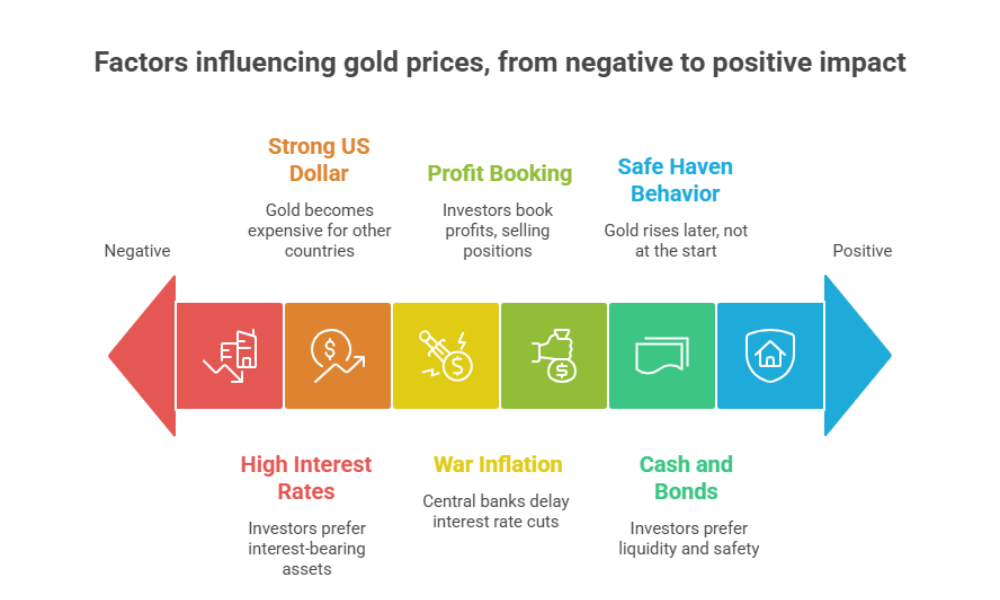
The biggest reason behind falling gold prices is high interest rates.
Gold does not provide any interest or returns like bonds or fixed deposits. When central banks keep interest rates high:
- Investors prefer interest-bearing assets
- Demand for gold decreases
- Prices begin to fall
Even during wartime, central banks are focusing on controlling inflation, which means rates are staying higher for longer.
2. Strong US Dollar Is Reducing Gold Demand
Gold is traded globally in US dollars. When the dollar becomes stronger:
- Gold becomes expensive for other countries
- Global demand weakens
In recent months, investors have shifted towards the US dollar as a safer and more liquid option, which is putting downward pressure on gold prices.
3. War Is Increasing Inflation—Not Helping Gold (Short-Term)
Wars, especially in oil-producing regions, are pushing oil prices higher.
This leads to:
- Rising inflation
- Central banks delaying interest rate cuts
While gold is traditionally an inflation hedge, in the short term:
➡️ Higher inflation = higher interest rates = negative for gold
4. Profit Booking After Record Highs
Gold recently touched all-time highs before the conflicts intensified.
As a result:
- Investors are booking profits
- Large funds are selling gold positions
This selling pressure is contributing to the current price drop.
5. Investors Are Moving to Cash and Bonds
In uncertain times, investors don’t just choose gold—they also prefer:
- Cash (for liquidity)
- Government bonds (for safety + returns)
This shift is reducing the flow of money into gold markets.
6. Safe-Haven Behavior Has Changed
Gold still acts as a safe-haven asset—but not immediately.
In modern markets:
- Investors first react to interest rates and liquidity
- Gold usually rises later, not at the start of conflicts
This delayed reaction is why gold is currently under pressure despite global instability.
What Does This Mean for Investors?
🔹 Short-Term Outlook
Gold may remain volatile or slightly weak due to:
- High interest rates
- Strong dollar
- Ongoing profit booking
🔹 Long-Term Outlook
Gold still holds strong fundamentals. Prices may rise when:
- Interest rates start falling
- Inflation stabilizes
- The dollar weakens
Conclusion
Gold is not falling because wars don’t matter—it’s falling because economic forces like interest rates and currency strength are currently more influential.
In today’s market:
👉 War alone is not enough to drive gold prices up
👉 Macro factors are leading the trend
For investors, this is a reminder that understanding the bigger economic picture is crucial before making decisions.
