
PM Modi’s Work From Home Appeal 2026: Why India May See a Hybrid Work Shift Again
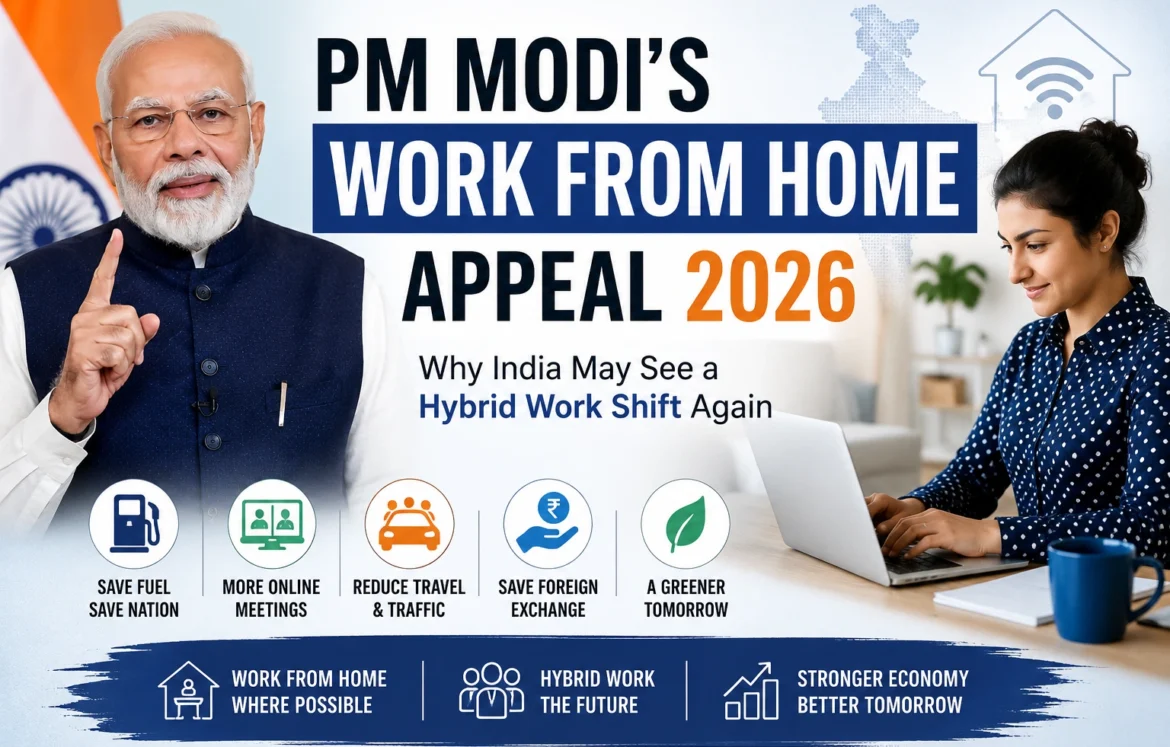
Prime Minister Narendra Modi has once again brought “Work From Home” (WFH) into national discussion. However, unlike the COVID-19 lockdown era, this time the reason is different. The government is encouraging citizens and businesses to reduce unnecessary fuel consumption, save foreign exchange, and prepare for global economic uncertainty caused by the ongoing West Asia crisis.
The statement has created major discussions among employees, IT companies, business leaders, and state governments. Many people are now asking whether India is moving toward another large-scale hybrid work culture.
In this blog, we will understand:
- Why PM Modi suggested Work From Home again
- The real reason behind the fuel-saving appeal
- How companies are reacting
- Possible impact on employees and businesses
- Whether India may see a permanent hybrid work future
What Did PM Modi Say About Work From Home?
During a public address, PM Modi urged citizens to adopt fuel-saving measures and restart some systems that became common during the COVID period. He encouraged:
- Work From Home wherever possible
- Online meetings and video conferences
- Public transport and carpooling
- Reduced unnecessary travel
- Greater use of electric vehicles
According to reports, PM Modi emphasized that saving fuel is not only an economic responsibility but also a national duty during periods of global instability.
Why Is the Government Talking About WFH Again?
1. Rising Global Fuel Prices
The ongoing conflict in West Asia has increased concerns about global oil supply disruptions. India imports nearly 85% of its crude oil requirements, making the country highly dependent on international fuel markets.
If oil prices rise sharply:
- Petrol and diesel become expensive
- Transportation costs increase
- Inflation rises
- Logistics and business operations become costly
To reduce fuel demand, the government is encouraging people to avoid unnecessary commuting.
How Work From Home Can Help India
Reduced Daily Fuel Consumption
Millions of employees travel daily using:
- Cars
- Bikes
- Cabs
- Office buses
Even reducing office commuting by 2–3 days per week could significantly reduce fuel consumption in major cities like:
- Bengaluru
- Hyderabad
- Pune
- Mumbai
- Gurugram
- Ahmedabad
Experts believe hybrid work can help reduce congestion and fuel dependency in urban India.
Is India Going Into Another Lockdown?
The simple answer is: No.
The government has clearly stated that there is no lockdown announcement and no mandatory nationwide Work From Home order.
Oil Minister Hardeep Singh Puri clarified that the government is only encouraging voluntary fuel-saving measures and not planning lockdown-style restrictions.
This means:
- Offices will remain open
- Schools are not officially closing
- WFH is optional and advisory-based
How Companies Are Reacting
Several major companies have started reviewing their travel and hybrid work policies after PM Modi’s appeal. Reports suggest that:
- IT firms are considering expanded hybrid work
- Consulting firms are reducing unnecessary travel
- Businesses are encouraging virtual meetings
- Many companies are monitoring fuel and operational costs closely
Industry leaders believe flexible working may help both employees and businesses during uncertain economic conditions.
State Governments Are Also Responding
Some state governments have already started discussing fuel-saving strategies.
For example, the government of Uttar Pradesh reportedly suggested:
- Work From Home for certain departments
- Online meetings
- Reduced vehicle usage
- Carpooling initiatives
This shows that the appeal is gradually influencing administrative decisions across India.
Advantages of Work From Home in 2026
Better Work-Life Balance
Employees can save commuting time and reduce travel stress.
Lower Fuel Expenses
Daily petrol and diesel expenses decrease significantly.
Reduced Traffic Congestion
Major metro cities may experience smoother traffic flow.
Cost Savings for Companies
Businesses can reduce operational and travel expenses.
Environmental Benefits
Less commuting means lower carbon emissions and pollution.
Challenges of Bringing Back WFH
Despite the benefits, Work From Home also creates challenges.
Increased Home Electricity Usage
Working from home increases:
- AC usage
- Internet consumption
- Electricity bills
Experts say energy consumption may shift from offices to homes.
Team Collaboration Issues
Many companies believe prolonged remote work can reduce:
- Team bonding
- Communication quality
- Office culture
Productivity Concerns
Some organizations still prefer office-based work for better monitoring and coordination.
Will Hybrid Work Become Permanent in India?
Many experts believe India may move toward a balanced hybrid work model instead of full-time remote work.
Possible future trends include:
- 2–3 days office attendance
- Online-first meetings
- Reduced corporate travel
- Flexible work policies
- Remote hiring expansion
The IT and service industries are likely to adopt hybrid work faster compared to manufacturing and retail sectors.
Public Reaction on Social Media
The announcement has triggered mixed reactions online.
Some employees welcomed the idea because:
- It saves travel costs
- Improves work-life balance
- Reduces traffic stress
Others believe:
- Companies may not fully support WFH again
- Hybrid work is more practical than full remote work
- Rising electricity bills may become a concern
Overall, the discussion has reopened debates about the future of office culture in India.
Conclusion
PM Modi’s Work From Home appeal is not about another lockdown. Instead, it is part of a broader strategy to reduce fuel consumption, protect India’s economy from global oil shocks, and encourage smarter resource usage during uncertain times.
While no nationwide WFH order has been issued, the conversation around hybrid work is clearly returning. Companies, governments, and employees are now reconsidering flexible work systems that can help both economic stability and employee convenience.
India may not fully return to the COVID-era remote work culture, but hybrid work could become a stronger part of the country’s future workplace model.
