
Great Nicobar Project: A Strategic Boost for India’s Economy and Defence
Introduction
The Great Nicobar Infrastructure Project is one of India’s most ambitious development initiatives, designed to accelerate economic growth while strengthening national security. Located on Great Nicobar Island, the project has gained national and global attention for its dual role in boosting trade and enhancing India’s strategic presence in the Indo-Pacific region.
What is the Great Nicobar Project?
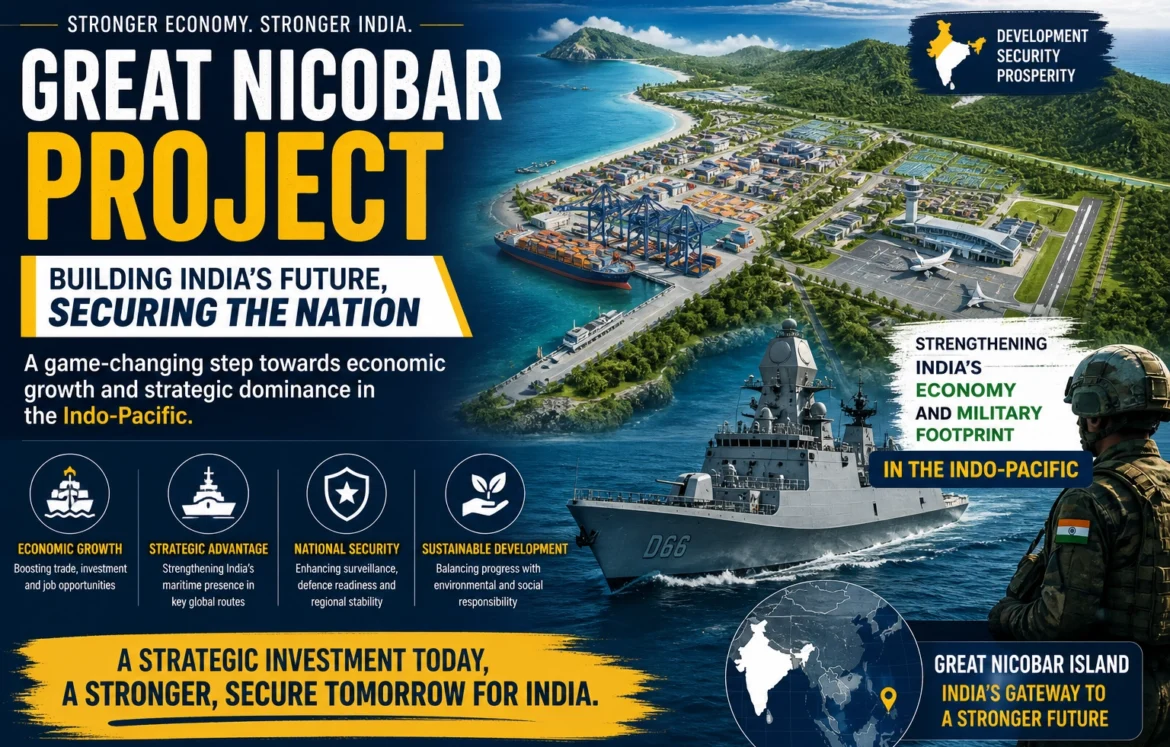
The Great Nicobar Project is a large-scale infrastructure plan aimed at transforming the island into a global economic hub. It includes the development of a transshipment port, an international airport, power facilities, and urban infrastructure. By leveraging its strategic location, India aims to position itself as a key player in international trade and maritime logistics.
Economic Importance
The project is expected to significantly contribute to India’s economic expansion by improving its participation in global trade. Its proximity to major shipping routes will help reduce dependence on foreign ports and create new opportunities for investment and employment. The total estimated investment for the project is around ₹75,000 crore to ₹90,000 crore, making it one of the largest infrastructure projects in India’s island territories. This large-scale spending is expected to boost industries such as logistics, construction, shipping, and tourism, while also generating employment and attracting foreign investment. Over time, this initiative could strengthen India’s position as a major logistics and trade center in Asia.
Strategic and Military Significance
One of the most critical aspects of the project is its strategic location near the Strait of Malacca, one of the busiest maritime routes in the world. This allows India to enhance surveillance, improve naval operations, and maintain a stronger presence in the Indo-Pacific. Defence experts believe that this development will play a key role in countering the growing influence of China in the region.
Environmental and Social Concerns
Despite its advantages, the project has raised concerns among environmentalists and local communities. Critics argue that large-scale construction could impact the island’s fragile ecosystem, including forests and wildlife. There are also concerns about the displacement of indigenous communities and the long-term sustainability of such rapid development in an ecologically sensitive area.
Geopolitical Perspective
From a geopolitical standpoint, the project is seen as a strategic move by India to strengthen its influence in the Indo-Pacific region. Supporters argue that delays or opposition to the project could benefit China, which has been actively expanding its presence through infrastructure investments and port development across the region.
Conclusion
The Great Nicobar Project represents a crucial step toward balancing economic growth with national security. While environmental challenges must be addressed responsibly, the project has the potential to transform India into a powerful maritime and economic force. Its success will depend on how effectively the country manages development while preserving ecological and social balance.
