
10 Early Signs of Diabetes Every Indian Should Know (Don’t Ignore These Warning Signals)
India is facing a diabetes crisis. Over 77 million adults in India currently live with Type 2 diabetes, and nearly 25 million more have prediabetes — a stage where blood sugar is elevated but not yet at diabetic levels. The most alarming fact? More than 50% of people with diabetes in India are completely unaware they have it.
Diabetes is often called a “silent killer” because it develops slowly, sometimes over years, with symptoms so subtle that most people dismiss them as tiredness, stress, or simply getting older. But left undetected, high blood sugar silently damages your kidneys, eyes, nerves, and heart.
The good news: if caught early — especially at the prediabetes stage — the condition is reversible with the right lifestyle changes.
Here are the 10 early warning signs of diabetes every Indian must know, and exactly what to do if you notice them.
Why Indians Are at Higher Risk
Before diving into the symptoms, it’s important to understand why diabetes hits Indians particularly hard.
Research shows that Asian Indians develop diabetes at a younger age and at lower body weight compared to Western populations. The reasons include:
- Genetic predisposition: Family history significantly raises your risk
- Diet high in refined carbohydrates: White rice, maida, and sugary foods spike blood sugar rapidly
- Sedentary lifestyle: Desk jobs and reduced physical activity slow down metabolism
- Abdominal fat: Indians tend to store more fat around the abdomen, which directly causes insulin resistance
- Stress: Work pressure and lifestyle imbalance are major contributors to rising diabetes cases in 2026
India currently ranks second globally in the total number of adults with diabetes — behind only China.
10 Early Warning Signs of Diabetes You Should Never Ignore
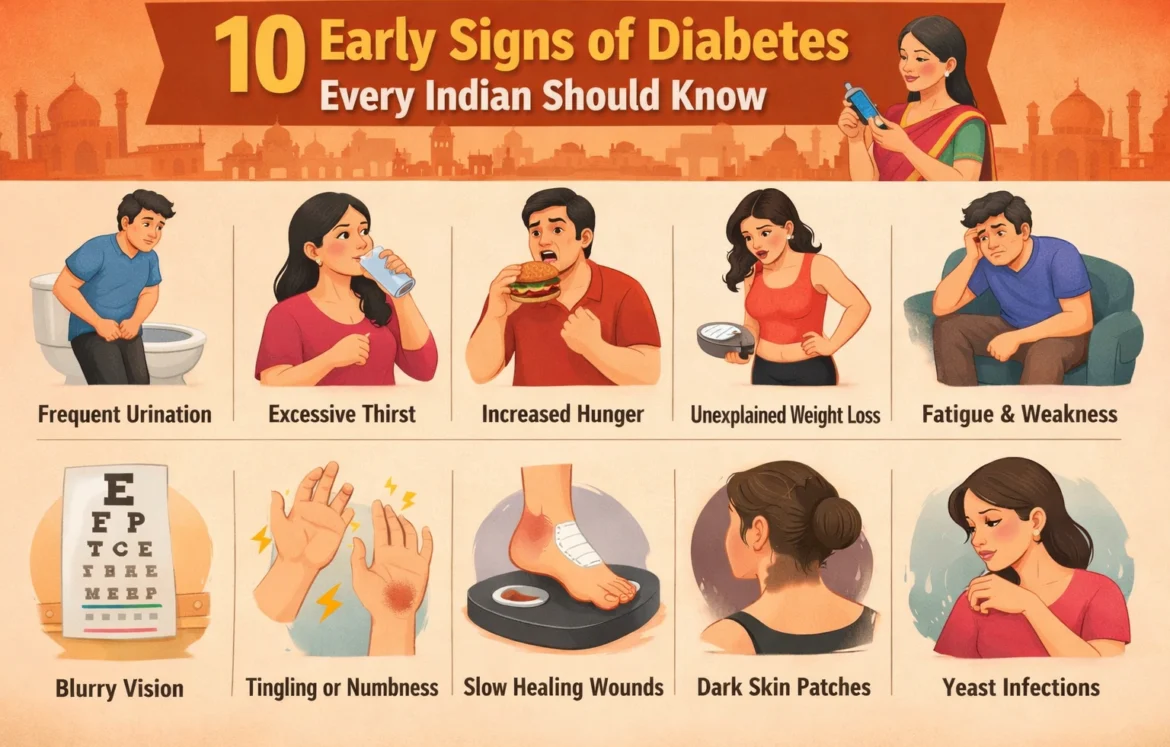
1. Frequent Urination — Especially at Night
If you’re making unusually frequent trips to the bathroom — particularly at night — take note. When blood sugar levels are high, the kidneys work overtime to filter and remove excess glucose through urine, leading to increased urination.
This isn’t just an inconvenience. Frequent urination causes rapid fluid loss, which leads to dehydration, fatigue, and worsening blood sugar imbalance.
What to watch for: Needing to urinate more than 6–7 times a day, or waking up 2–3 times at night to use the bathroom.
2. Excessive Thirst That Never Seems Quenched
Frequent urination causes your body to lose large amounts of fluid. To compensate, you feel persistently and intensely thirsty — no matter how much water you drink.
This constant dehydration cycle (urination → thirst → drinking → more urination) is one of the earliest and most recognizable signs of diabetes. In medical terms, this symptom is called polydipsia.
What to watch for: Feeling unusually thirsty throughout the day even after drinking adequate water.
3. Unexplained Fatigue and Low Energy
Do you feel exhausted even after a full night’s sleep? Persistent, unexplained fatigue is one of the most commonly reported — and most commonly ignored — early signs of diabetes in Indians.
When your body can’t use glucose properly for energy (due to insulin resistance), your cells are literally starved of fuel even while blood sugar is high. The result is constant tiredness, brain fog, and a general feeling of being run down.
What to watch for: Feeling deeply tired after meals, especially high-carbohydrate meals (rice, roti, sweets).
4. Blurred Vision
High blood sugar causes fluid to shift in and out of the lens of your eye, making it difficult for the eye to focus properly. This results in blurred or fuzzy vision that can come and go.
This is often mistaken for needing new glasses. While vision typically improves when blood sugar is controlled, long-term uncontrolled diabetes can lead to diabetic retinopathy, a leading cause of vision loss in India.
What to watch for: Vision that fluctuates throughout the day, or sudden blurriness that wasn’t there before.
5. Slow-Healing Wounds and Cuts
Notice that a small cut or bruise is taking unusually long to heal? This is a significant warning sign. High blood sugar impairs blood circulation and immune function, making it harder for the body to repair itself.
This symptom is particularly dangerous because minor wounds that don’t heal properly can become infected. In severe cases of uncontrolled diabetes, poor wound healing can lead to serious infections and complications.
What to watch for: Cuts or sores that take more than 2 weeks to heal, recurring skin infections, or wounds that become inflamed easily.
6. Tingling, Numbness, or Burning in Hands and Feet
Persistently high blood sugar damages the peripheral nerves over time — a condition called diabetic neuropathy. Early signs include tingling, numbness, pins-and-needles sensations, or a burning feeling in the hands, feet, and legs.
This symptom often starts subtly and in the feet, making it easy to dismiss as “sitting in one position too long” or “poor circulation.” But if it’s recurring or spreading, it warrants immediate investigation.
What to watch for: Regular tingling or numbness in the extremities, especially in the feet, that occurs without obvious cause.
7. Persistent Hunger Even After Eating
Feeling hungry very soon after a full meal? This is called polyphagia, and it’s caused by the body’s inability to properly convert glucose into cellular energy.
When cells can’t absorb glucose properly (due to insulin resistance), they send hunger signals to the brain even when blood sugar levels are actually high. This creates a frustrating cycle: eating more leads to higher blood sugar, which worsens insulin resistance, which creates more hunger.
What to watch for: Feeling genuinely hungry within 1–2 hours of eating a full meal, or craving sugary or starchy foods constantly.
8. Unexplained Weight Loss
While many people associate diabetes with weight gain, unexpected weight loss is actually a significant early warning sign — especially for Type 1 diabetes, but also for uncontrolled Type 2.
When the body can’t use glucose for energy, it begins breaking down muscle and fat for fuel instead. This leads to weight loss even when you’re eating normally or even eating more than usual.
What to watch for: Losing more than 4–5 kg over 2–3 months without any changes to your diet or exercise routine.
9. Frequent Skin and Fungal Infections
Diabetes weakens the immune system and creates a high-sugar environment in the body — perfect conditions for bacteria and fungi to thrive. People with undiagnosed diabetes often suffer from:
- Recurring urinary tract infections (UTIs) — particularly common in women
- Fungal infections in skin folds, between toes, or in the groin area
- Frequent skin infections that keep coming back
- Gum infections and slow-healing mouth sores
What to watch for: Getting the same type of infection repeatedly (especially skin or UTIs), or infections that don’t fully clear up with standard treatment.
10. Dark Velvety Patches on Skin (Acanthosis Nigricans)
This is one of the most visible and specific signs of insulin resistance. If you notice dark, velvety, almost velvety-looking patches of skin — typically on the back of the neck, in the armpits, around the elbows, or in skin folds — it could indicate that your body is producing excess insulin to compensate for insulin resistance.
This condition is called acanthosis nigricans, and it’s particularly common in Indian patients. Many people mistake it for dirt or a skin pigmentation issue, but it’s actually a metabolic warning sign.
What to watch for: Dark, rough-textured patches in skin folds or on the back of the neck that don’t go away with regular washing.
Less Obvious Signs Indians Often Miss
Beyond the classic 10 symptoms, watch out for these lesser-known warning signs that are increasingly seen in Indian patients:
- Fruity-smelling breath: Caused by ketones being released when the body burns fat instead of glucose
- Dry mouth and skin: Dehydration from excess urination dries out tissues
- Headaches and difficulty concentrating: Brain cells deprived of stable glucose supply
- Irritability and mood swings: Blood sugar fluctuations directly affect brain chemistry
- Erectile dysfunction in men: Nerve and blood vessel damage from high blood sugar can affect sexual function — often one of the earliest signs in men that goes unaddressed
Am I at Risk? Key Risk Factors for Indians
You’re at higher risk of diabetes if you:
- Have a parent or sibling with diabetes
- Are overweight or have abdominal fat (waist above 90 cm for men, 80 cm for women)
- Are above age 35
- Have a sedentary lifestyle
- Eat a diet high in refined carbohydrates and sugar
- Have polycystic ovary syndrome (PCOS) — a significant risk factor for women
- Had gestational diabetes during pregnancy
- Have been diagnosed with prediabetes before
What Should You Do If You Notice These Signs?
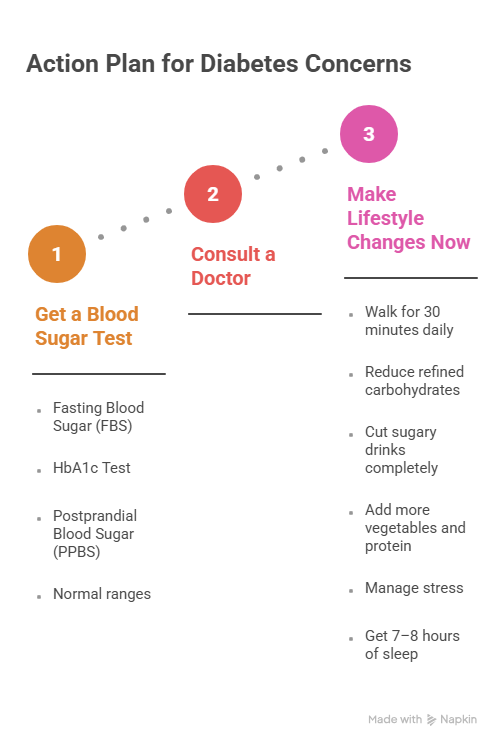
Don’t panic — but don’t ignore either. Here’s a step-by-step action plan:
Step 1: Get a Blood Sugar Test
The most important step is simple: visit your nearest diagnostic centre or hospital and request a diabetes screening. Key tests include:
- Fasting Blood Sugar (FBS): Measures blood sugar after 8 hours of fasting
- HbA1c Test: Shows your average blood sugar over the past 2–3 months — the gold standard for diabetes diagnosis
- Postprandial Blood Sugar (PPBS): Measures sugar 2 hours after a meal
Normal ranges: – Fasting: Below 100 mg/dL – HbA1c: Below 5.7% – PPBS: Below 140 mg/dL
Step 2: Consult a Doctor
If your results are borderline or high, see a physician or endocrinologist. Don’t self-diagnose or self-medicate.
Step 3: Make Lifestyle Changes Now
Even before seeing a doctor, there are proven steps you can take immediately:
- Walk for 30 minutes daily — Even brisk walking significantly improves insulin sensitivity
- Reduce refined carbohydrates — Replace white rice and maida with whole grains like brown rice, jowar, and bajra
- Cut sugary drinks completely — Chai with 2 spoons of sugar, cold drinks, and packaged juices are major blood sugar spikers
- Add more vegetables and protein — Fiber slows glucose absorption; protein keeps blood sugar stable
- Manage stress — Yoga, meditation, or even 10 minutes of deep breathing can lower cortisol and stabilize blood sugar
- Get 7–8 hours of sleep — Sleep deprivation directly impairs insulin sensitivity
Understanding the Numbers: What Do They Mean?
| Category | Fasting Blood Sugar | HbA1c |
| Normal | Below 100 mg/dL | Below 5.7% |
| Prediabetes | 100–125 mg/dL | 5.7% – 6.4% |
| Diabetes | 126 mg/dL or above | 6.5% or above |
Prediabetes is reversible. With the right changes in diet, exercise, and stress management, many people with prediabetes successfully prevent the condition from progressing to full Type 2 diabetes.
The Most Important Takeaway
Diabetes doesn’t announce itself with dramatic symptoms. It whispers — through quiet fatigue, occasional blurriness, or a wound that takes a little longer to heal. Millions of Indians are living with undiagnosed diabetes right now, and every year of delayed diagnosis means more silent damage to the body.
If you recognize 2 or more of the symptoms above, especially if they’ve been present for several weeks, don’t wait. A simple blood test — available at any pathology lab for under ₹500 — can give you clarity and potentially save your life.
Early detection is everything. The earlier you act, the more options you have.
FAQs
Q1: What is the most common early sign of diabetes in Indians?
Frequent urination and excessive thirst are the most commonly reported early symptoms, followed closely by persistent fatigue and blurred vision.
Q2: At what age should Indians get screened for diabetes?
The Indian Council of Medical Research (ICMR) recommends screening from age 35 for those with 2 or more risk factors. If you have a family history of diabetes, screening from age 25–30 is advisable.
Q3: Can prediabetes be reversed?
Yes. Prediabetes is reversible with lifestyle changes — regular physical activity, dietary improvements, and weight management. Studies show that losing just 5–7% of body weight can significantly reduce the risk of progression.
Q4: Is diabetes only linked to eating too much sugar?
No. While diet plays a role, diabetes is caused by a combination of genetics, lifestyle, stress, sleep patterns, and other factors. You can develop Type 2 diabetes without eating excessive sugar if other risk factors are present.
Q5: What blood test is best for detecting diabetes early?
The HbA1c test is considered the most reliable indicator as it reflects your average blood sugar over 2–3 months and doesn’t require fasting.
